
Solutions · EV Charging
EV Charging + Storage Solutions
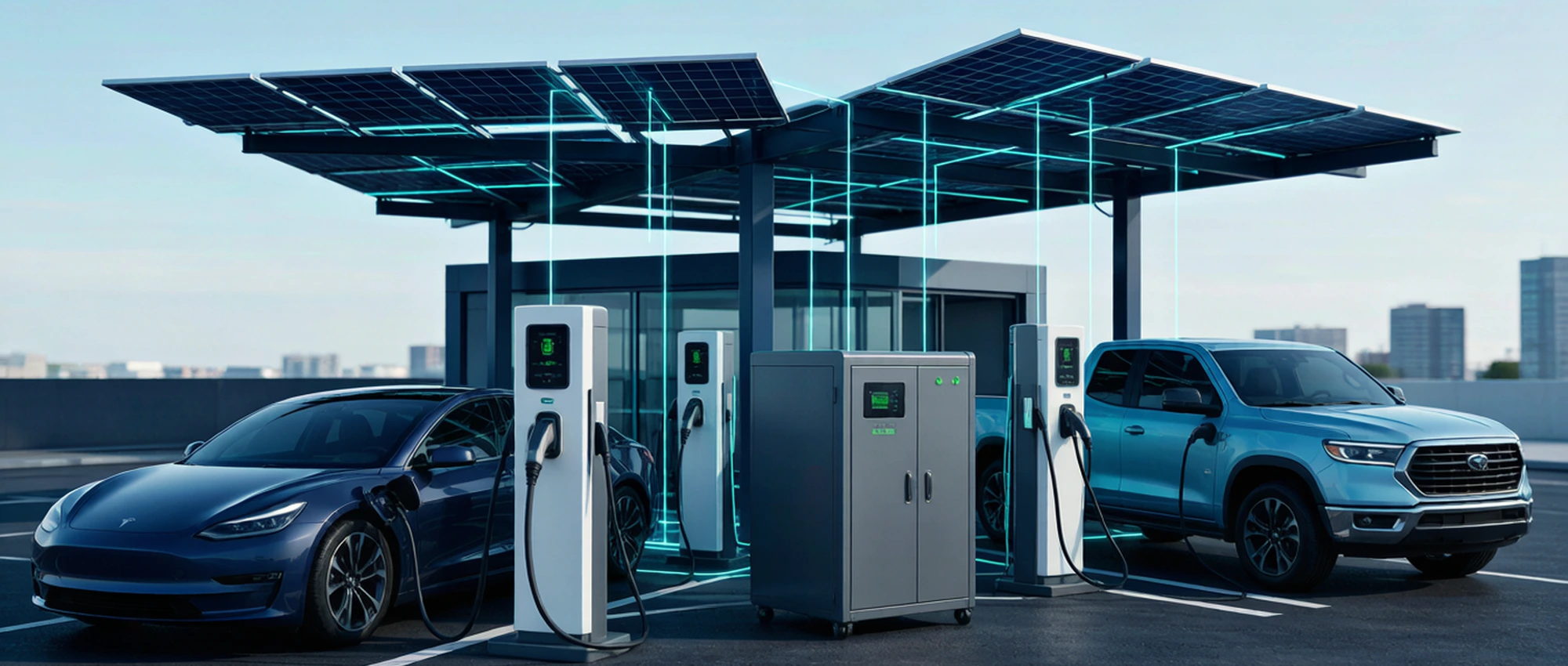
Pair energy storage with EV charging to add fast-charging capacity without costly grid upgrades, and to shield sites from demand charges.
Grid-upgrade avoidancePeak bufferingSolar-readyScalable
01The Challenge
The Challenge
Fast EV charging creates short, severe power spikes that can exceed a site’s grid connection and trigger high demand charges or expensive upgrades.
- Fast chargers demand more power than many grid connections allow
- Simultaneous charging events cause costly demand-charge spikes
- Grid capacity upgrades are slow and expensive
- Charging uptime affects customer and fleet satisfaction
02Solution Overview
How the System Works
The storage buffer charges slowly from the grid or on-site solar. When chargers demand a burst of power, the battery supplies the difference, so the site's grid draw stays within its connection limit. The EMS keeps peak demand — and the resulting charges — under control.
1
Buffer
Storage charges steadily from the grid or on-site solar at low power.
2
Boost
During charging peaks the battery supplements grid supply for fast delivery.
3
Protect
Peak draw stays within the connection limit, avoiding demand-charge spikes.
03System Architecture
Typical System Architecture
The battery sits between the grid connection and the chargers. It charges slowly and discharges fast, so the grid only sees a steady, bounded draw even when multiple vehicles charge at once.
EV charging + storage topology: sources → PCS buffer → BMS → battery → chargers and site loads.
04System Components
What Makes Up the System
Each StorXing solution pairs our LiFePO4 storage with the conversion, control and monitoring hardware needed for the application.
PCS Buffer Stage
Charges slowly, discharges fast to meet charger peaks.
Battery Management System
Protects the buffer pack under high charge/discharge rates.
Buffer Battery Bank
Supplies extra power during simultaneous charging sessions.
Charger Interface
Coordinates buffer output with charger demand.
Energy Management
Keeps grid draw within the connection limit.
Site Monitoring
Tracks charger use, buffer state and demand charges.
05Typical Applications
Where This Solution Is Deployed
Real deployment contexts for this solution across residential, commercial and industrial sites.
Fleet depots
Add fast charging without upgrading the grid connection.
Highway hubs
Buffer peak demand at high-traffic charging stations.
Workplace charging
Manage daytime charging load for staff and visitors.
Retail & fuel stations
Pair forecourt chargers with on-site storage.
Planning a charging site?
Tell us your charger power and grid connection — we size a storage buffer to keep peaks inside the limit.
06Recommended Products
Products in This Solution
The products normally specified for this solution. The core system is included by default; expansion products are added as the project grows. Final configuration is confirmed by our engineering team.
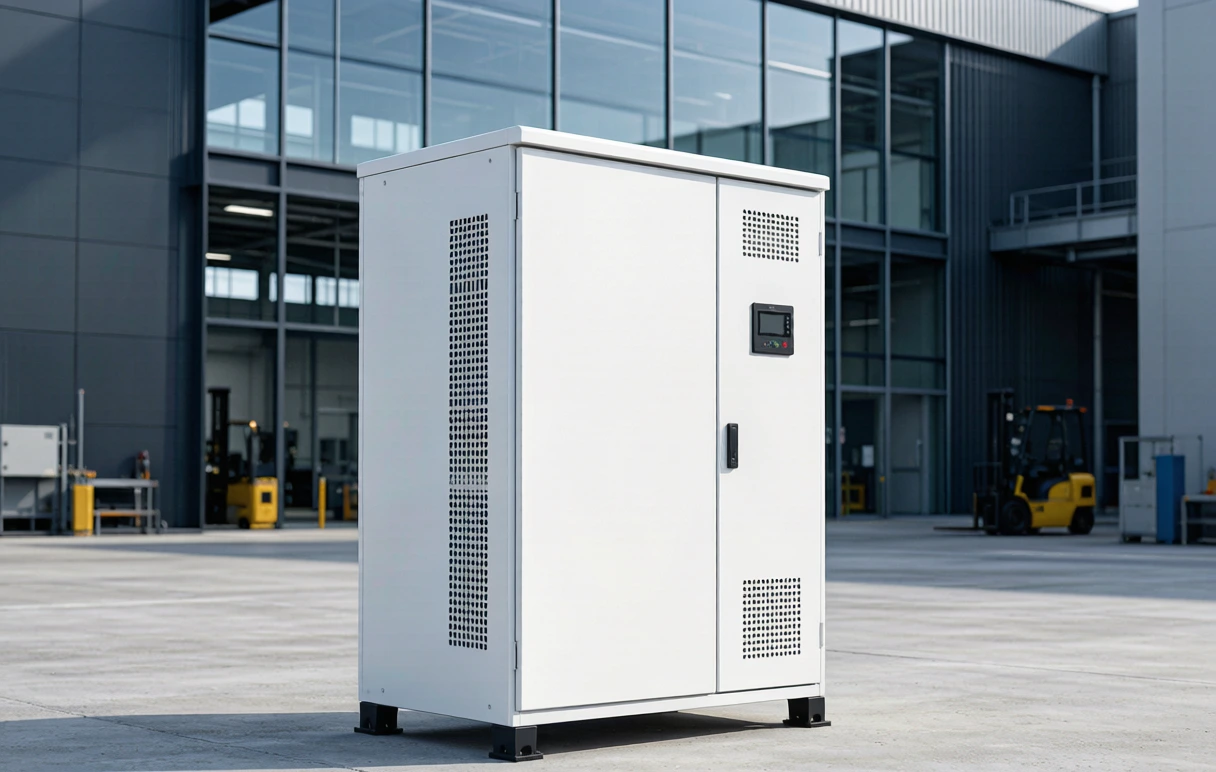
Commercial & Industrial Energy Storage
Scalable commercial and industrial storage for peak shaving, demand management, and grid support.
View Product →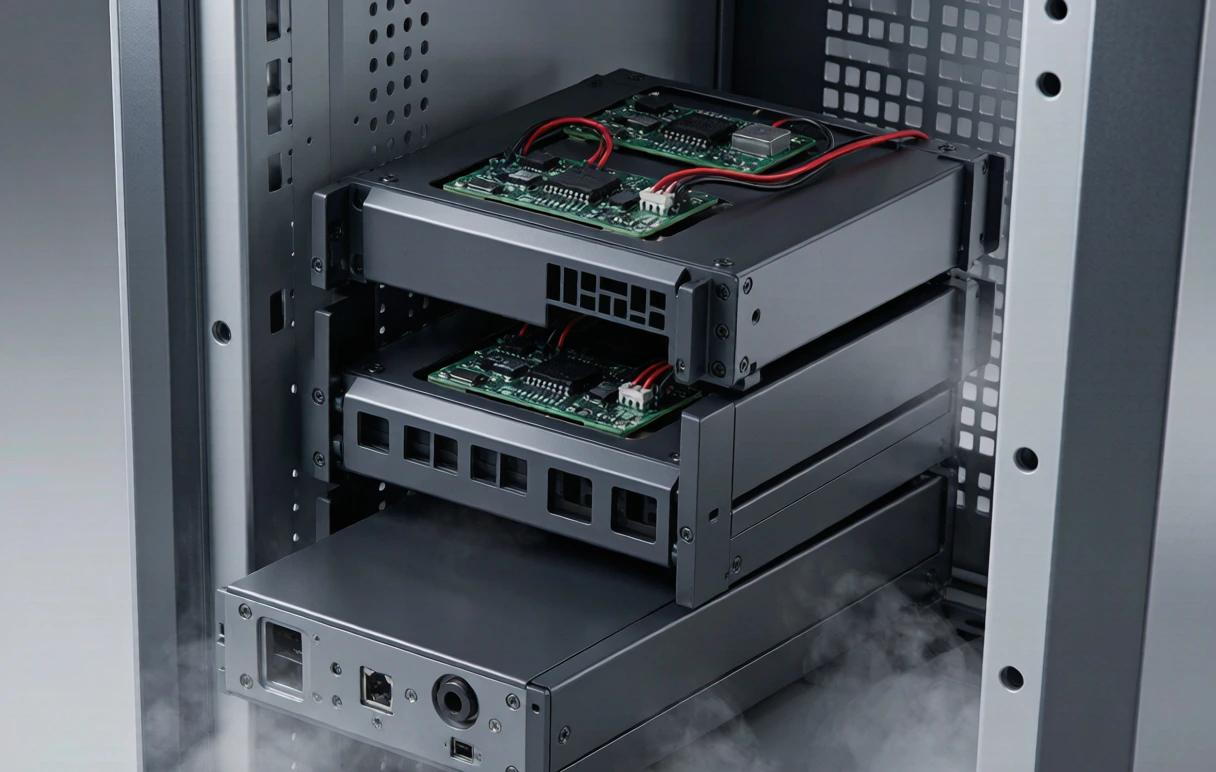
Battery Storage Components
Battery modules and BMS building blocks that scale storage capacity across system sizes.
View Product →07Industries Served
Industries Served
This solution supports the following industries. Explore each for tailored use cases.
08Key Benefits
Key Benefits
Avoid Grid Upgrades
Add fast chargers within the existing connection.
Cut Demand Charges
Buffer absorbs charging spikes before they hit the meter.
Solar Ready
Charge the buffer from on-site solar when available.
Higher Uptime
Stored energy keeps chargers available at peak times.
09FAQ
Frequently Asked Questions
Can we add fast chargers without upgrading the grid connection?
Often yes. A storage buffer supplies the extra power during charging peaks so the grid draw stays within the existing connection limit.
Does this work with solar?
Yes. The buffer can be charged from on-site solar as well as off-peak grid energy.
How is the system sized?
Sizing depends on charger power, expected simultaneous sessions and connection capacity. We recommend a configuration on request.
Plan a charging + storage site
Tell us your charger power and grid connection — we will size a storage buffer to match.